Wednesday, July 11, 2012

Week 11: Beta Signups, Kickstarter, Name Possibility, and Metronome

The latest build with this update's content is now available.

Beta Signups Are Open


We prefer to have a direct relationship with our users, measuring and processing their feedback to best continue on our next steps.  A result of this style is that we don't fit cleanly into old, traditional milestones.

Some might say we're not even in alpha, yet we're a live product.  Our online service is even getting actual user feedback!

Labels aren't important, so we're going to simply wield them in a manner useful for development.  Here's what we're near.

  • Accounts for users.
  • Creations being saved on a user account.
  • Creations being saved and available for viewing by other users.

Again, we're already a live product and defying the conventional model for software development by being so transparent.  With the above, we want people to visit and feel like their presence is continued beyond a single session -- eventually beyond a single device or machine.

In video games, that level of tracking feedback, user engagement, and deployment is part of a beta.

Signing Up


You can sign up on the site or through this link.

Artist Accounts and Creations


While other services have "usernames", you are an artist within our service.  In our current vision, artists have a reputation based on actions within our service.
  • Is this an artist that creates good works?
  • Has this artist judged good works toward the notoriety they deserve?
To that end, our first trials into this back-end will consist of saving your works and giving you a representation for your reputation.  Beta users will also be given an indicator that distinguishes them from others as the true early adopters they are.

For reasons that we legally suspect but aren't clear about, we need to be absolutely safe about this part.  

Anything you create will be saved on our databases.  
This may get tricky in terms of "ownership".
We do not intend to blatantly sell your music or betray your trust,
but please note that we do not owe you anything
in any way
and that using our service means
you're totally fine with us having the creations you make
with our service.

Don't let unknown worries stop you: if you're the type to care that much about ownership and usage, you're exactly the kind of intense user we want to make happy throughout this account development.  Talk to us.

We're still small!  You can EASILY get in touch with the developers (email, twitter, G+, etc.) if you have any questions or concerns.  

Kickstarter


We will be putting the notation creation component on Kickstarter for funding.  Thank you to all the individuals offering to help film a video for this endeavor!

If you know of a boy and a girl -- around ages 5-11-- that can read and recite lines effectively, please let us know if they can say some lines for a video.  We'll show you the storyboard and discuss more details.

Filming goes on the weekend of July 20th (Friday) and July 21st (Saturday).

Want to contribute?  Just let us know what you can do.  Here's what we're planning.

- Filming (outdoors, at this time)
- Recording of Dialog
- Recording of Audio*
- Video Editing

* We really could use help with this, especially if you have equipment for recording music.

Tyrone Pham, early adopter...

... and part of the resourceful
ragtag filmmakers team from El Monte,
KidsWithSticks.

A New Name for the Service?


Back when we were still thinking of being in the space of composition software, we had come upon the name "InNotation".  While currently we're fine with referring to the composition component by this name, our service as a whole offers a networked judgment of high-quality music works.  InNotation doesn't describe that part of our dream.

In German, "lied" literally means "song", with "lieder" being a set of these "art songs".  In competitions, a leaderboard shows the ranked competitors of an activity -- whether it's sports or video games.

Our service will be a leaderboard of musical greats, works that are competitively ranked by the very musicians best qualified to judge them.  In other words, it will be a "liederboard".

You can now access our iterations at liederboard.com.  If you can think of a better name for the service, please feel free to share!

We are deeply grateful to the early adopter Mei Francis.  She's the spectacular marketing coordinator that freely gave the idea for this name.

A Metronome!


This week's build brings with it an indicator for the beats and a tweak to the input.  

We were able to write out quarter notes reliably with this new system and the metronome.  Give it a shot yourself at liederboard.com!


... And the Beat Goes On...


The most common reaction from writing out rhythms is that artists want to hear what they've written.  For week 11, we have playback as the top feature to implement.  

We also want to hear what you have to say about the metronome!  Leave a comment here or keep using the early adopter groups.

Research is going on with setting up the backend for the account development that will mark our beta period.  We hope you're as excited as we are to be able to save your works!

Screenshot of the build at week 11.


Wednesday, June 27, 2012

Week 9: Sessions With Our Users, Sheet Music

The latest build is available at  http://dfavela.com/innotation/.  Try to write out some rhythms!  Our open sessions have led to controls that bypass the beats and allow you to write the music you already have in your head; read on for details, expert musicians!

Open Sessions: Direct User-Developer Interactions


We are extremely fortunate to have talented and enthusiastic early adopters.  Kirk Wang, for example, is a musician in the Army Reserves.  He writes and arranges music for multiple instruments and ensembles. 

Kirk Wang (2nd from the left) at the Dodgers' stadium
for a performance. 


Thanks to Google+ Hangouts, he was also a great source of interaction and feedback this past week.  The productivity from this development was tremendous and fast-paced.  Here are some features he wanted and that you -- especially if you are a professional or experienced hobbyist in music composition -- may also love.

Controls: Bypass the Beats!


Kirk knows what he wants to write; he's a skilled musician.  He doesn't need to iterate through notes, so he asked for ways to write notes directly.

- You can use number keys to write notes.
2 or NUMPAD2: whole note
3 or NUMPAD3: half note
4 or NUMPAD4: quarter note
5 or NUMPAD5: eighth note
6 or NUMPAD6: sixteenth note

- You can hold down keys to change what type of notation you write!
R or NUMPAD0: your notes (above) are rests instead
PERIOD ( . ) : your notes (above) are dotted where appropriate

Editing, Selecting & Deleting Notes


Kirk wanted the notes to behave like a cursor in a text editor: he should be able to delete the note he just wrote.

- Cursor now follows the last note you write until you change the selection manually (left or right).
- Notes can now be deleted with the DELETE key (not the BACKSPACE key!).
- The cursor now shows up in rows past the first.
- Related bugs, or unfinished implementations, were fixed.

The Sheet Music Takes Shape


How great does that treble clef and time signature look?

Robert was assigned with figuring out the math for a treble clef and he nailed it.  This is the good stuff that simply looks fantastic and will be taken for granted tomorrow, but for now, those of us here from day 1 can look at the product and marvel at how it's shaping up to look like -- or better than! -- the paper sheet music we'll no longer have to deal with manually.

Hey... You're An Early Adopter Too! 


The open sessions were extremely productive and very fun.  We'd like to open this up to more users, so keep an eye on the user groups (especially the Facebook one, which is currently the most popular) for opportunities to jump into a Google+ Hangout.

See you in one of these open sessions, soon!


A screenshot of InNotation
at week 9, fueled by early adopters
like you.

... And the Beat Goes On ...


For week 9, we're starting development on a metronome to give you an idea of the beat going on.  We may start implementing a playback feature so you can hear the rhythms you've entered.

On the business end, we'll be hearing back from mentors and lawyers for legal counsel around the product and incorporation.  Know a good lawyer that wants easy business with typical startup procedures?  Let us know!


Tuesday, June 19, 2012

Week 8: Write Rhythms & Give Feedback, Value Proposition, First Stats, Incorporation

Artists!  You can now write out rhythms with InNotation!  Head over to http://dfavela.com/innotation!

Feedback & Features


We wouldn't have such a useful service if we simply stuck to planned feature lists and specs before input from you, the quick musician.  To that end, we really want you to try writing out music!

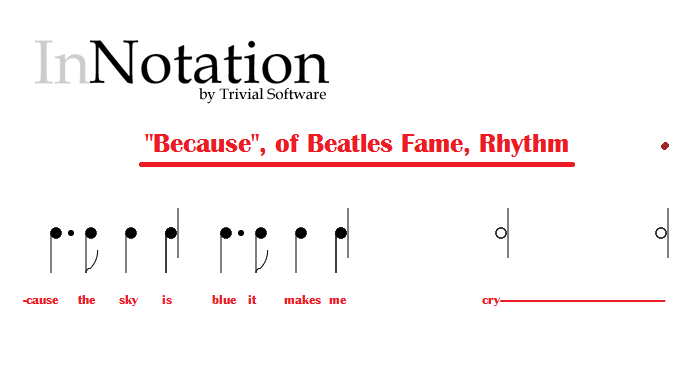
Okay, so you  know about pop music...
It was last week's feedback that put editing notes -- which are now done! -- as the next priority, and it's that same feedback that is going to make us decide on how best to react to what users are saying  most.

  1. I'm trying to tap in "Shave and a Haircut" and I have no idea if I wrote it correctly because I don't read music.
  2. The note lengths are changing too fast for me to get the one I want.

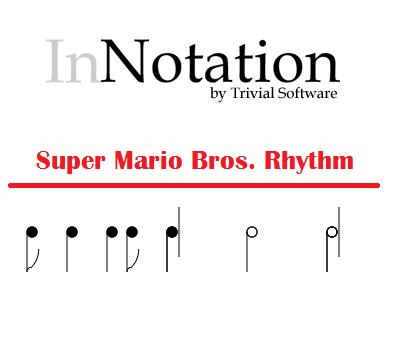
    ...but do you know about the classics?
What did you think about your experience?  Here's how to really find out:
  • don't try to test out the feature for bugs, 
  • don't limit yourself to analyzing each component unrealistically, 
  • just try to write out your music and the best solutions (and any bugs) will expose themselves!
A different type of classic.

Value Proposition


On Saturday, we attended an informational and pitch-contest event hosted by Cross Campus, an up-and-coming collaborative workspace here in Santa Monica.  The observations and answers we found there, combined with the continued feedback from users both new and loyal, have further honed in and revealed the best angle for our pitch.

Here's how you can explain our service to a friend.

Buddy: Hey, what's that?
Heartily-Incredible Person: Just a competitive music creation game.  It's online and in development right now.
B: What does it do?
HIP: You know of Mozart or Beethoven, right?
B: Yeah.
HIP: Tell me who today's Mozart and Beethoven are.
B: Uh... I don't know, "Call Me Maybe" is pretty popular right now.
HIP: That's right.  None of us know because we're just letting the musical geniuses of our time die unheard.  You've probably seen better talent on YouTube than most of America has heard in a decade of radio, but your discovery ends at someone's Facebook wall!
B: Wow.  Historians are going to look back at our civilization's artists and either laugh or try to forget us.  How do we keep that from happening?!
HIP: This is how we're going to find the best music humanity can make.  You, I, and other awesome musicians and listeners are going to push some quality music up into humanity's winning musicians bracket.  Other musicians'll do the same.  Then anyone can go here and listen to the best music thanks to us -- actual composers and musicians!  Who knows, maybe I'll win with this piece I'm writing; I'm pretty awesome, after all.
B: You must be if you knew about this!

This angle was tested by refining it continuously during conversations at Saturday's event.  The more we got toward the angle of an online game for better music, the better the reactions.  It makes sense, after all: who doesn't want to create music as easily as playing a social game?  Who wouldn't want to hit the search button on YouTube and find the cream of the crop from other actual musicians?

Here's a version of the pitch itself; note that "InNotation" as a name may change.

InNotation is the musician's cheap, intuitive, and accessible game to
globally improve music in a market otherwise barred by
cost or isolated by old software models.
Their creations can be submitted and judged against other works and by other musicians.
Users and works can win a spot in competitive rankings, ultimately
crowdsourcing the best that internet-connected musicians have to offer.


By the Numbers!


Late in the week, we were able to set up a tracking system for some analytics.  Before we get into the numbers, though, let's make these vanity metrics even better by considering where we stand.
  • The days currently tracked are days without major updates. 
  • We haven't pushed on marketing devices, whether it's our twitter account or actual advertising.
  • Our user base is relatively closed, with friends merely looping in their friends that are also frustrated musicians on the lookout for great solutions.
The website on which InNotation is hosted shows over 100 hits as a daily average, with the innotation page being the most popular.  We'll update with more milestones over time.

Forming the Corporation: Legal Steps


On Friday of last week, Robert wrapped up the first steps for our monetization.  With interest and development continuing for our project, we want to use this button for a few things.
  • Ensure that the functionality is implemented correctly!
  • Gauge how effective a Google Wallet "Buy" button is outside of the app.
  • Gauge how supportive users are willing to be to let us keep making this!
After launch, supporters will be rewarded with an indicator that sets their usernames apart from other users, indicating that this early adopter had the foresight and disposition to help establish our product and company.

Luckily, a friend informed us that this is a big legal step just as we were on the verge of finalizing the implementation with our Google Merchant account.  Saturday's event yielded answers, guidance, and resources which indicate our next step is to form our corporation.

We are now looking into legal counsel.  If you have input or recommendations around pre-paid legal services (our most likely option at this time), please contact us at our email (trivialsoftware [at] Google's popular mail service -dotcom).  If you are a lawyer or attorney capable of advising us for a deferred cost, we are happy to negotiate terms for your services.

After this next step, we will be able to start iterating on monetization strategies to -- we hope! -- set an example as a non-evil, effective microtransaction-sustained service provider.

... And the Beat Goes On ...


Robert takes the reigns of development as legal counsel is sought and incorporation finalized.  He'll be setting the stage with a treble clef and time signature to clarify the writing of music.  After that, he'll be starting on an indicator for the metronome so that rhythm-writing becomes clearer.

Expect a new build with those indicators next week, as well as a company well on its way to being founded!

No longer shall the software developer's language conflict with the artist's language!
(Courtesy of a Facebook share from our early adopter Frank Salgado)

Friday, June 15, 2012

Policies

This page provides details around processes such as returns, cancellations, and refunds.  It is subject to change as we continue to grow.


Refunds/Cancellations


Please allow some days for refunds and cancellations.  Your digital goods will be removed such that your account and any related effects are restored to a state before the purchase.  Trivial Software will make decisions about any ambiguities with regards to details of the digital goods and aforementioned states.


Shipping


These goods are digital goods; they are virtual, not physical.  No tangible goods will be delivered to any physical location.

Wednesday, June 13, 2012

Week 7: A Clean Engine, Unique Value Proposition

You can see this week's build at http://dfavela.com/innotation!

Business - Our Unique Value Proposition


Though our users are excited about what and who we are, our mentoring brought us to a less clear area about ourselves: how will we sustain ourselves?  Would investors be clear about what value we offer?

Trivial Software


As a company, Trivial Software aims to provide tailored services to elite niches overlooked in mainstream successes.  In terms of value, this means developing accessible software for high-barrier markets.

InNotation


As a product, InNotation is the first example of that service.  Though we are continually iterating on InNotation with our early adopters, there are two prospects for this service.

  1. InNotation is an affordable and accessible service in a music software industry full of barriers.
  2. InNotation is a competitive music creation game.

Both of these possibilities have their potential.  Usage, feedback, and support will ultimately dictate the direction InNotation takes -- whether it is one of the two futures above or a third emergent manifestation.

Tech - Cleaning Up the Engine


A screenshot of the build for week 7.

The input, rendering, and data-writing systems have been completely revamped.  The current deployment is built atop that foundation and is already showing quick development thanks to its improved, modular architecture.

Go ahead -- try to write some rhythms!  Give us feedback about how it feels!

...And the Beat Goes On...


Week 7 will bring development of the Google Wallet system that will keep this endeavor alive.  Robert is already showing promising transactions, and we look forward to getting this up and running so we can observe what monetization strategy best resonates with our users.

Aside from that, all the functionality from the previous engine will be restored into the new engine.  In the next two weeks, we hope to get you -- and ourselves! -- the ability to write a song made of different-pitched notes and rests!


Wednesday, May 30, 2012

The Soul of Trivial Software and InNotation's Elite

This section was moved from the week 5 update into its own post.

The Business End - What's In A Company


Others' Soul-Searching


Many of the companies you support have mission statements and formal business plans.  Looking at these can be a fun and enlightening exercise. See for yourself if you can identify the companies in the following ten mission statements and core values.

Highlight the missing names to see the company.

  • Google’s mission is to organize the world’s information and make it universally accessible and useful.
  • Apple believes "that people with passion can change the world for the better." -- at least they did in 1997, according to this video...
  •  ... but on their website, they say "Apple designs Macs, the best personal computers in the world, along with OS X, iLife, iWork and professional software. Apple leads the digital music revolution with its iPods and iTunes online store. Apple has reinvented the mobile phone with its revolutionary iPhone and App Store, and is defining the future of mobile media and computing devices with iPad."
  • Amazon’s vision is to be earth’s most customer centric company; to build a place where people can come to find and discover anything they might want to buy online.
  • Dell's mission is to be the most successful computer company in the world at delivering the best customer experience in markets we serve.
  • Facebook’s mission is to give people the power to share and make the world more open and connected.
  • Blizzard Entertainment is "Dedicated to creating the most epic entertainment experiences... ever.".
  • Riot Games aims "to be the most player-centered game studio in the world".
  • Microsoft’s mission is to enable people and businesses throughout the world to realize their full potential.
  • Twitter had its mission statement as a work in progress for a long time before deciding it wanted "To instantly connect people everywhere to what's most important to them." 
Some are more easily identifiable than others.  Some are tied to a product; others to a never-ending goal.  All offer a myriad of paths for us to identify ourselves.

 Trivial Software


Trivial Software did not start by looking to make the most money or to gain the most number of users in the world.  Trivial Software is the result of looking at current software experiences and being dissatisfied despite such traditional measures of success.  We think not everyone is content with their software -- we see that some of you are even frustrated with whatever industry that software fuels.

We believe you are part of an elite population and that you're being overlooked thanks to the mainstream success established by a majority.  It is genuinely sad to think that you are limited to the tools of the majority, because we also think that behind that dissatisfaction lies a powerful and restrained creativity.

So... we're going to make tools for you.

Trivial Software's mission is to provide
services tailored to an elite niche
overlooked in mainstream successes.

Let's look at what that means at the product level.  Let's talk about our first tool for you: InNotation.


Here are some top results from a Google search for "top hits", at the time of this writing. 

http://www.billboard.com/charts/hot-100#
Perhaps you're one of those that know how all of these songs work without even listening to them.  You know exactly what software is required to record a sound, clean it up, and how to edit it so it repeats across a few loops.

You know more went into auto-tuning than was spent on anything you actually call music.

You know this because, maybe even in addition to doing the above professionally, you write your own music at home.  Works that you consider real music.  You even keep good company with friends that perform your art with you.  You've wanted to talk to them in that language musicians know... but writing it by hand took too long.

That only took hours or days to complete
and it's certainly all correct, right?
Time to write someone else's part...

Using music software disconnects you from your creations; clicking a box to select a note length interrupts the rhythm drumming on in your head.  Forget it.  So much easier to record that melody, import it in, clean up that sound, maybe edit it across a few loops... wait a minute.

This is limitation, artist, and you are not alone in this unintended oppression.

InNotation is for you, the elite musician that can speak the language of sixteenth notes and fermatas, to intuitively create sheet music. 

We will know InNotation is a success if our civilization sees a rise in high-quality, deep, or complex music.

Week 5: How We Face Failure

Week 4's build is now available at http://dfavela.com/innotation.

There are not many differences from last week's build; back-end work was completed for input, which is turning out to be a larger endeavor than a single week's worth of work.

Confidently Facing Failure


The team holds itself to a set of work to complete each week.  We're musicians just like you -- we want to get this tool out and it won't happen unless we keep taking steps forward.

If we don't finish what we wanted to, that's a failure.  If we do finish it and can say "Our users would want this right now.  WE want this right now!", then that's a success.

We unabashedly admit failure, identify the source of that failure, and address factors leading to it for week 4.

The Problems


Bugged Build
Week 4's build introduced a bug that affected how rests and notes were drawn.  This bug was severe enough to make us think it was unacceptable to deploy and also prevented us from seeing the fruits of our new work.

Large Feature Specs
The feature specifications for input and rests are also too large.  Tackling all of the cases possible from sixteenth notes to whole notes was slowing us down considerably -- our work was feeling more tedious than challenging and the results-to-effort ratio was consequently unsatisfying.

The Solutions


Bugged Build
1. The last stable build -- which in the worst case will always be what's deployed weekly to the website -- was used as a basis for work.  New code is being integrated into this stable build.
2. The MVC design pattern was discussed with the team so that code would follow principles that make our code more functionally modular. For those of you not versed in design patterns, that means that a bug in our growing code will not reach far (if at all) outside its module.  

Large Feature Spec
The stories around input were broken down and are now based on the different duration of notes and rests -- a basis which we saw firsthand came naturally as we programmed last week.  With that experience now integrated into what will become the input system, we can proceed with a better sense of scope and granularity for the input system.

Firsthand Look at How We Work


If you've ever wondered how we work, a video is now available where you can watch us go through our week 4 discussion for the above.   Here are some more details, in case you're wondering how things go in general.

Mondays 
  • Review of last week's work
  • Retrospective of last week's work
  • Planning for the upcoming week's work
Tuesdays through Fridays
  • Any necessary discussions or questions around current work
  • Programming!
We communicate remotely from 2-4pm using Google+.  Sometimes, we have ice cream; we suppose that'll become  more frequent if we someday want a physical office space.


Soul


The previous section about Trivial Software has been moved to its own post here.

... And The Beat Goes On...


Week 5 will be spent developing the input system.  Next week, expect to see sixteenth rests, sixteenth notes, and eighth notes behaving in their final implementation for input.  We will also be programming the drawing of different note length variants.

Week 5 Stories